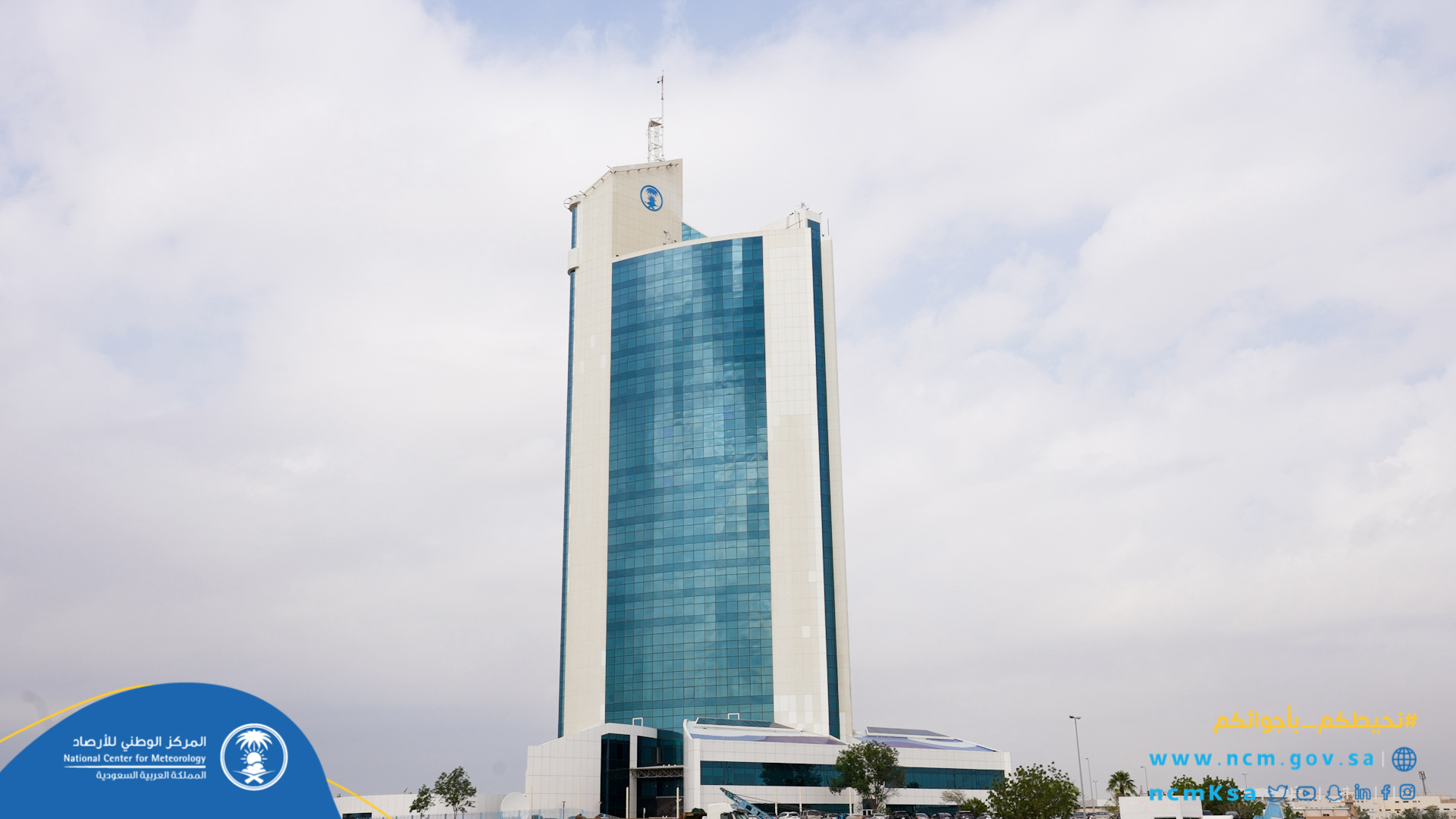
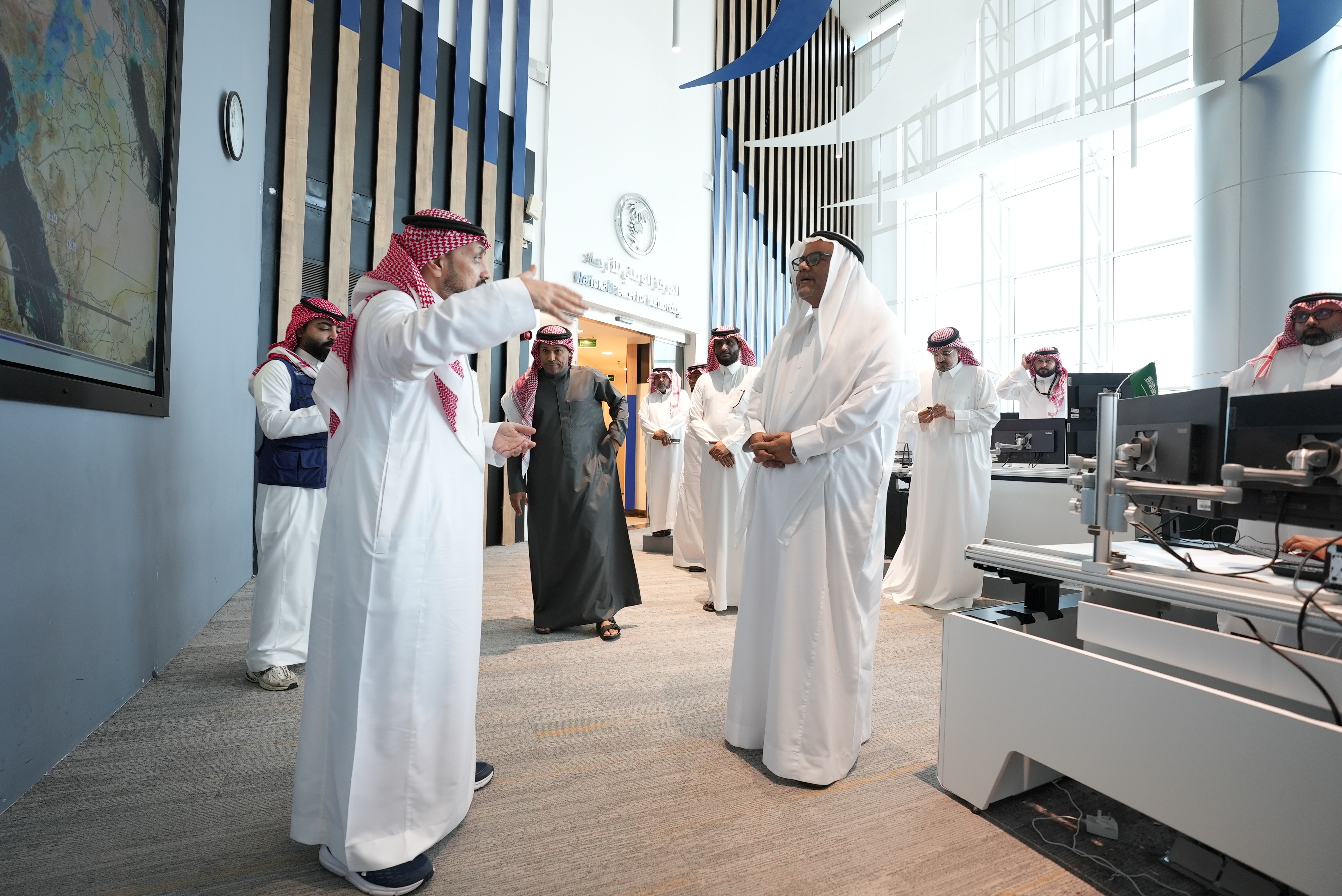
The National Center of Meteorology (NCM) at its headquarters in Jeddah Governorate today carried out the "Rasd-12" exercise, with the participation of 24 government agencies linked to the Central Emergency Room, with the aim of testing the mechanisms of reporting, passing and escalation of weather phenomena, and verifying the effectiveness of the detailed emergency plan for the Hajj season in 1447 AH.
The exercise was part of an integrated methodology for managing hypothetical exercises, which included the planning, implementation and evaluation phases, based on the National Risk Council's Exercise Management Guidelines and Frameworks. Through this initiative, the center aims to achieve the highest levels of institutional integration and ensure a response in record time, ensure that proactive reports reach all stakeholders well in advance of the event, and inventory and document performance during the exercise by 100% to ensure continuous development.
The exercise scenario relied on a realistic simulation of a sharp rise in surface temperatures over the holy capital and the holy sites, coinciding with a high human density during the Hajj season. The exercise focused on testing the readiness of activating operational roles, and measuring the ability of the entities to convert climate reports and early warnings into field actions that contribute to the safety of the pilgrims.
The hypothesis included the release of the "Climate Outlook Report" and the "Proactive Report", with an analysis of the potential impact of the weather condition including the risks of heat stress and heatstroke. The exercise concluded with performance evaluation procedures by a specialized team to identify strengths and opportunities for improvement, and emphasize the sustainability of digital communication channels to exchange data and information with high efficiency.

 العربية











.png)