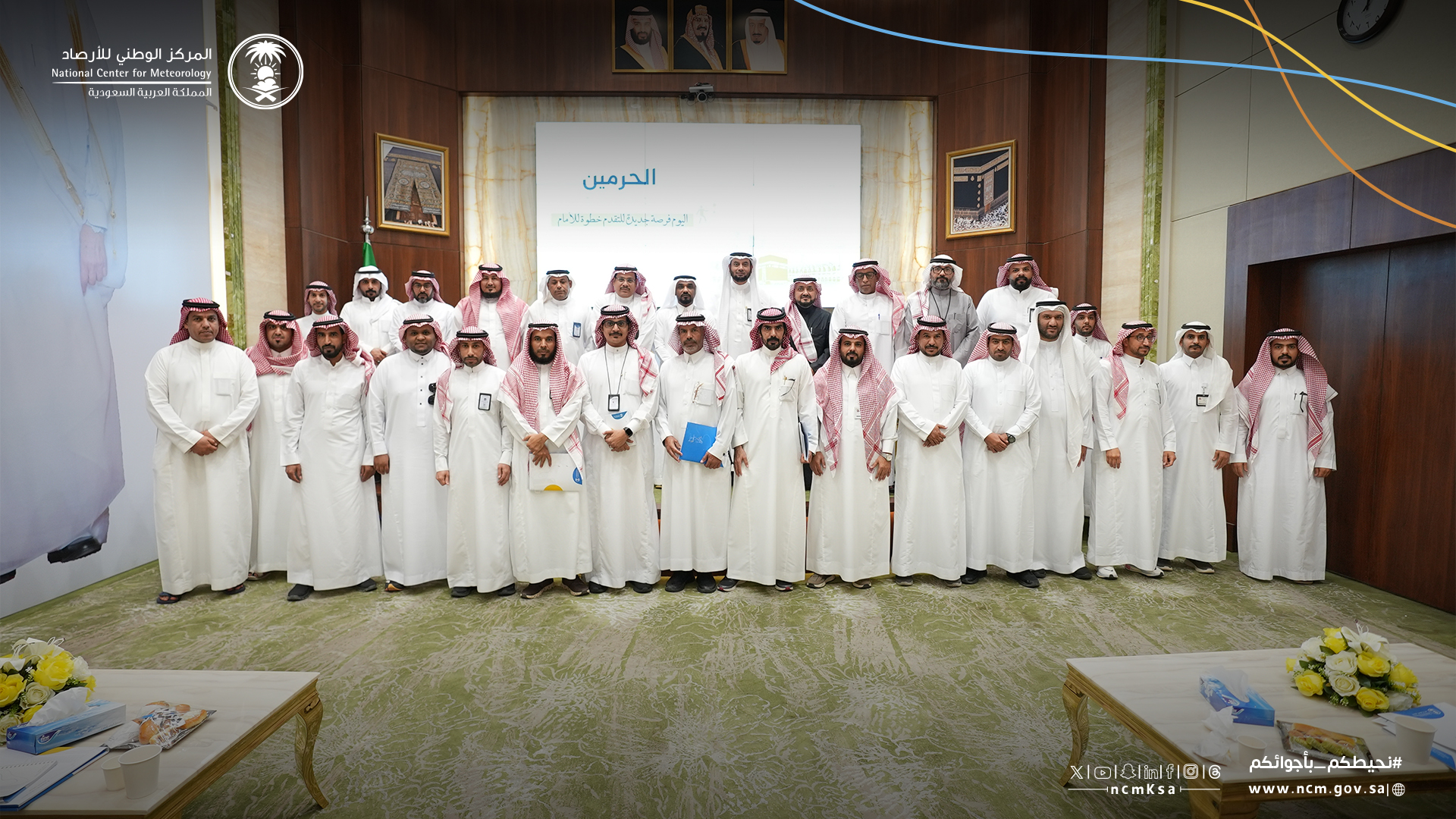
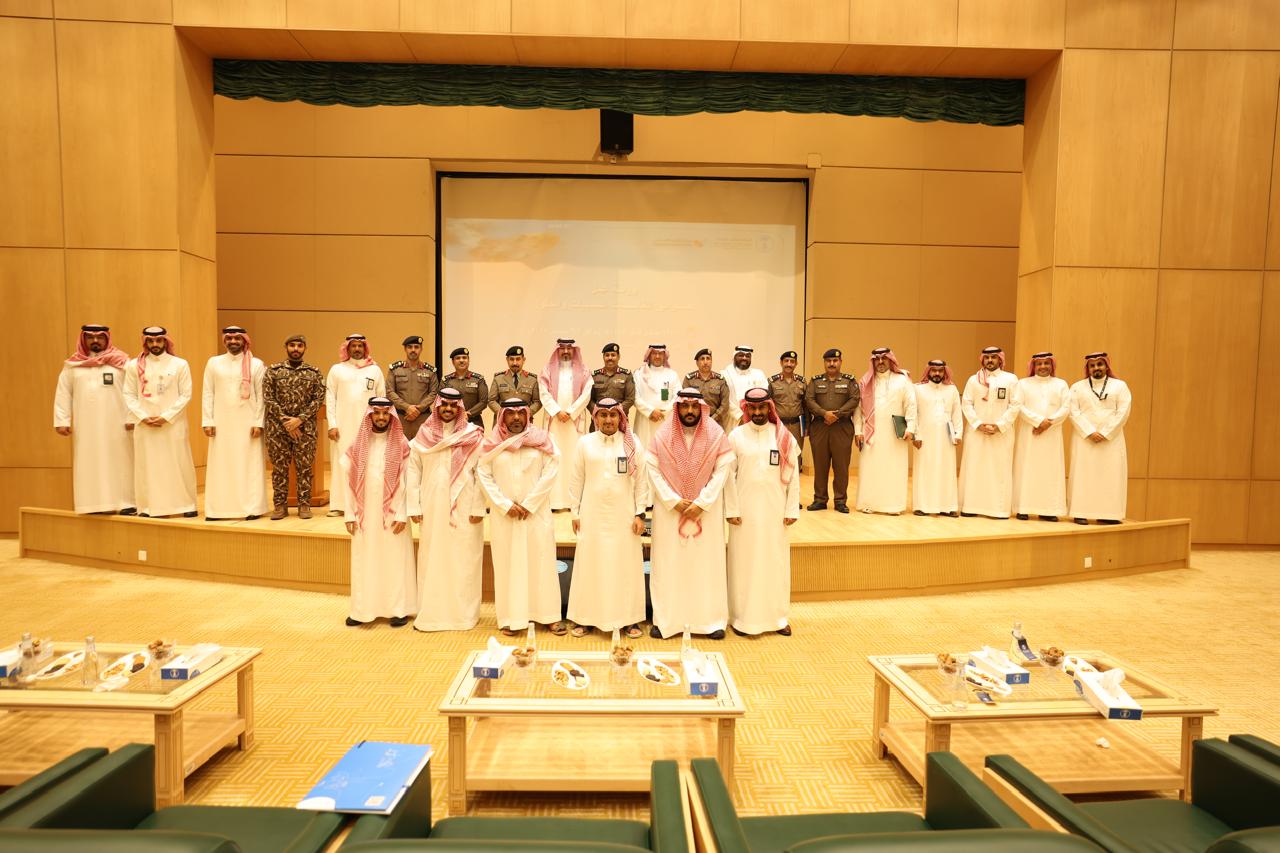
The National Center of Meteorology (NCM) concluded today its specialized training program for employees of the General Presidency for the Affairs of the Grand Mosque and the Prophet's Mosque, which aims to enhance readiness and effective response to weather phenomena that may affect the Two Holy Mosques, as part of the center's preparations for the Ramadan and Hajj seasons.
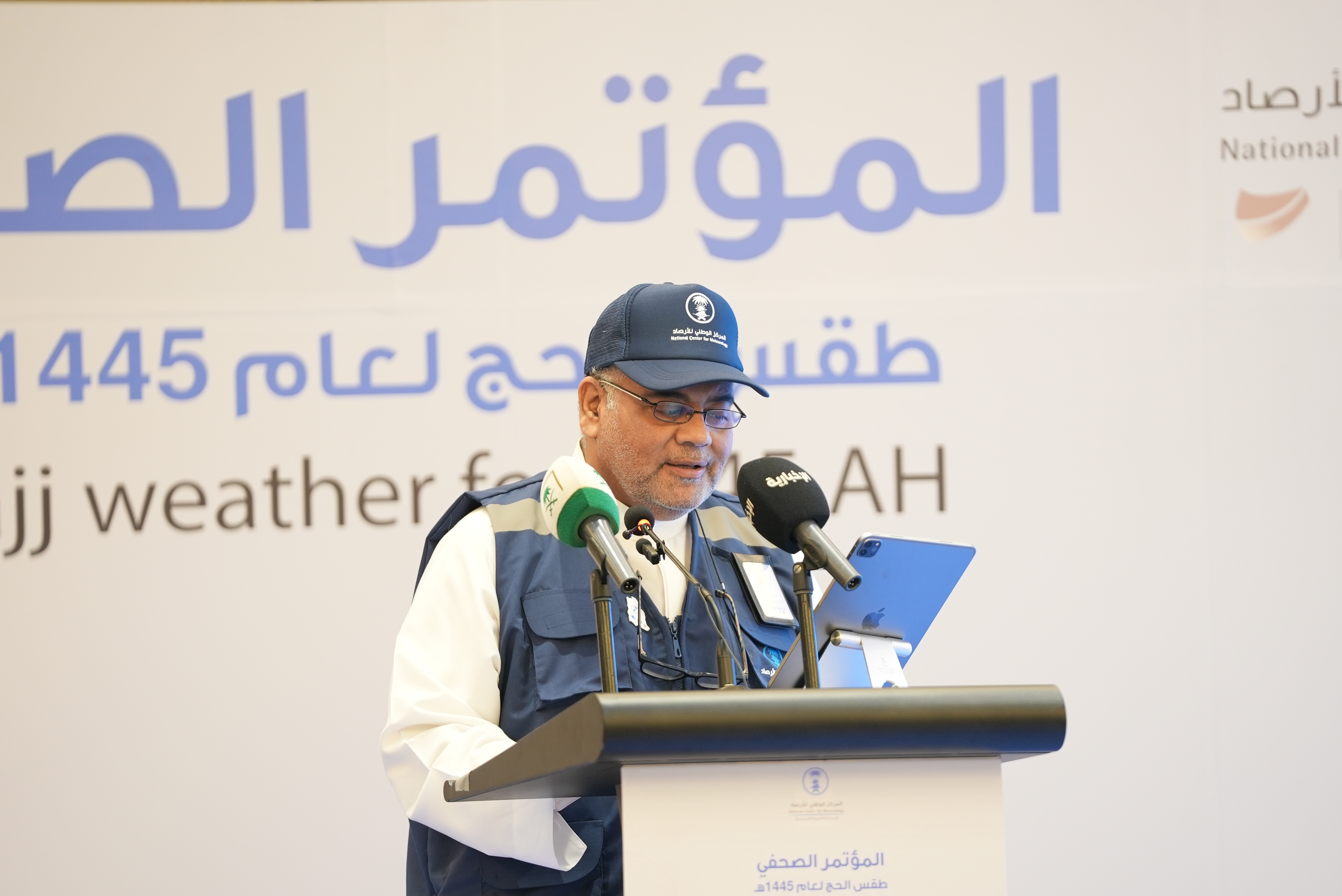
The training sessions opened with a presentation by the Director General of the General Directorate of Research, Development and Innovation and the General Supervisor of Hajj and Umrah works at the center, Dr. Turki Habiballah, in which he addressed the accurate climatic data of the Two Holy Mosques, where he pointed out that the month of November represents the peak rainfall with an average of 22 mm in Makkah and 13 mm in Madinah, while the average maximum temperature during the peak months is 44.0 degrees Celsius in Makkah during June and 43.7 degrees Celsius in Medina during August.
This was followed by a session presented by the Center's official spokesperson and Director of the Media and Public Relations Department, Hussain Al-Qahtani, during which he reviewed the impact of weather phenomena on the Two Holy Mosques, stressing the importance of benefiting from climate reports in planning future projects, enhancing precautions to keep pace with climate changes, and ensuring an immediate response to the warnings issued by the National Center of Meteorology.
On the topic of weather warning mechanism and warning standards, Abdulrahman Al-Zahrani, Director of the Early Warning Department, explained that the center relies on the analysis of atmospheric elements and the outputs of numerical models to determine the need for warning and warning of possible weather phenomena, which enables the concerned authorities to raise the level of preparedness and advance preparedness.
Hilal Al-Ayyafi, Director of the Center's branch in Makkah Al-Mukarramah Region, then reviewed the systems of monitoring devices in the central region of the Two Holy Mosques, stressing the role of the meteorological monitoring network in measuring weather elements, which contributes to enhancing the safety of lives and property and supporting operational operations during the Hajj and Umrah seasons.
Afterwards, the Director of Crisis and Disaster Management at the Center, Mohammed Al-Bakri, touched on ways of coordination in emergency situations, stressing that advance preparation and continuous training on immediate response contribute to reducing the effects of weather phenomena, and that the priority is always to protect lives and make quick and effective decisions to ensure public safety.
The program concluded with a discussion session moderated by the Director General of the General Directorate of Weather and Climate Forecasts at the Center, Hamza bin Abdulaziz Komi, during which the most important points addressed in the training program were reviewed, and solutions and recommendations were put forward to enhance the readiness of the cadres working in the Two Holy Mosques to deal with various weather phenomena effectively and efficiently.
This program comes within the framework of the ongoing cooperation between the National Center of Meteorology and the General Presidency for the Affairs of the Grand Mosque and the Prophet's Mosque, with the aim of raising the efficiency of cadres and enhancing their ability to deal with various weather phenomena, to ensure the security and safety of the pilgrims during the Hajj and Umrah seasons.

 العربية






.png)