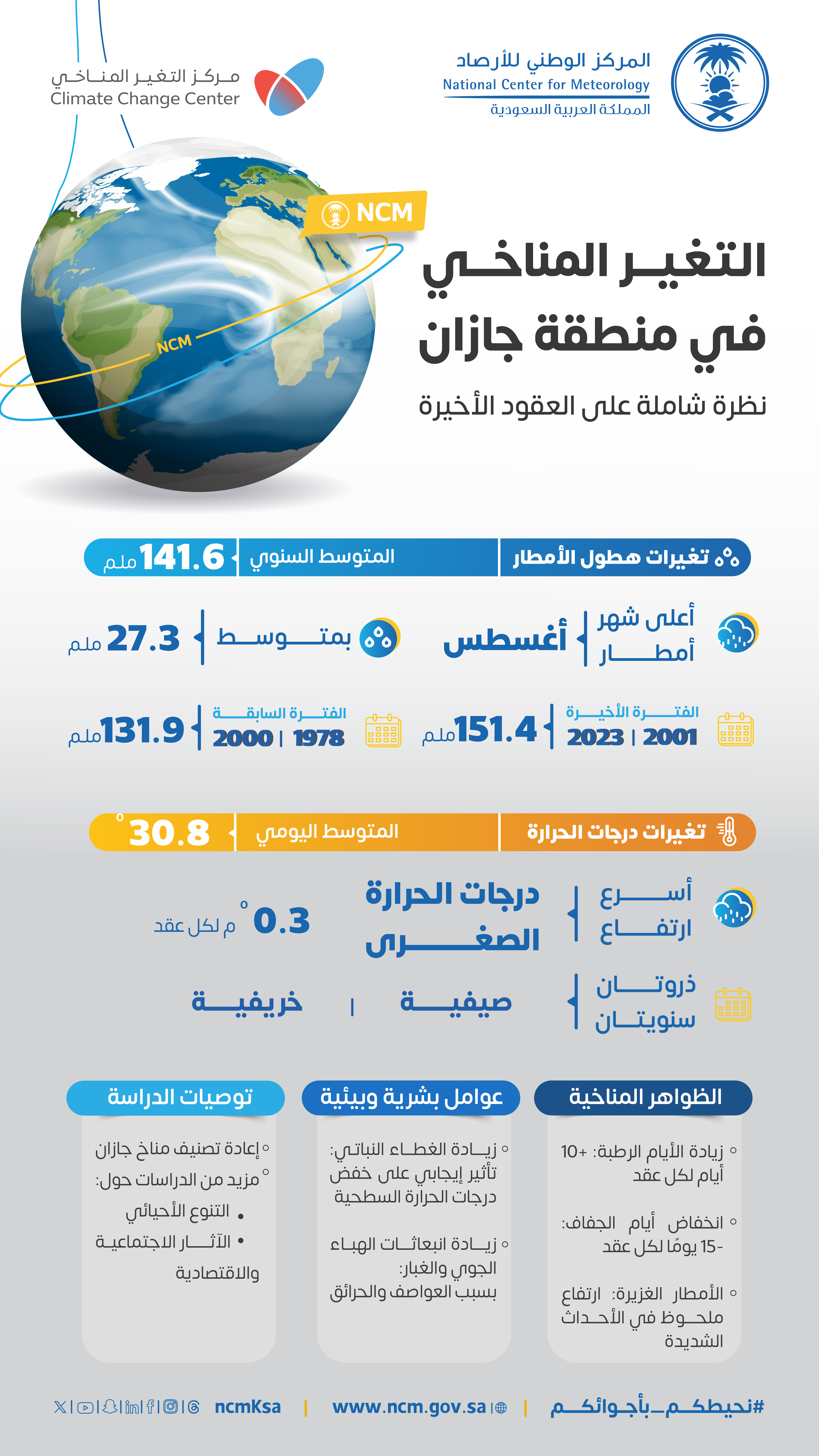
A recent study issued by the Climate Change Center of the National Center of Meteorology revealed notable climatic changes witnessed in the Jazan region during the past decades, including an increase in annual rainfall rates and a decrease in the number of dry days, which necessitated a recommendation to reclassify the region's climate to keep pace with new developments.
The study showed that the average annual rainfall in Jazan reached 141.6 mm with a noticeable variation between the months, as the highest monthly average rainfall was recorded in October 1997 with 157.5 mm, and the highest daily average on October 22 of the same year by 90 mm.
The data indicates a significant increase in rainfall rates during the period from 2001 to 2023 compared to the previous decades between 1978 and 2000, with the annual average rising from 131.9 mm to 151.4 mm, with the escalation of heavy and very heavy rainy events.
The study also observed a gradual rise in temperatures, with the maximum peaking in the summer at 38.4 degrees Celsius, while the minimum recorded its highest in July at 30.3 degrees Celsius, and the study explained that the rise in minimum temperatures was faster than the maximum, reflecting the effects of climate change in the region.
The study reported that these climate changes reflected positively on the local environment, as an increase in vegetation cover and soil moisture was observed, which contributed to mitigating the impact of urban heat islands, but the region also witnessed a rise in the rates of aerosols caused by human activity such as fuel burning, increased dust and dust storms.
The study recommended the need to strengthen efforts to reclassify the climate of the Jazan region, in addition to conducting additional studies on biodiversity and the impact of climate change on environmental, social and economic systems.
It is noteworthy that the study was delivered to His Royal Highness Prince Mohammed bin Nasser bin Abdulaziz, Governor of Jazan Region, by the CEO of the National Center of Meteorology, Dr. Ayman Ghulam, who provided a full explanation of its findings and recommendations.
Jazan is approaching the tropical climate
The Climate Change Center had previously announced that the Jazan region is approaching the classification of a tropical climate that rains throughout the year, which reinforces the need for careful follow-up of climate change and its future effects.

 العربية












.png)