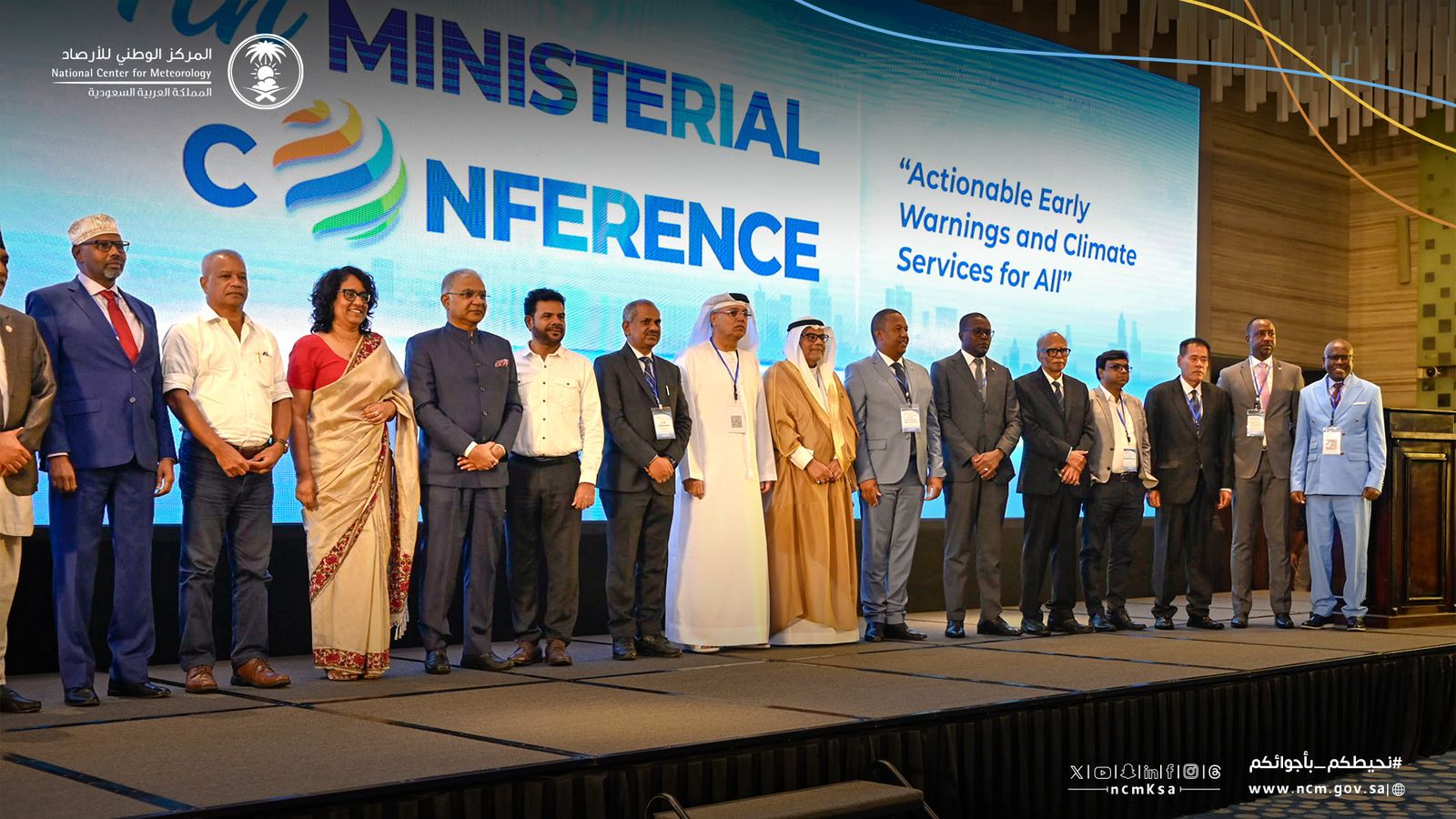
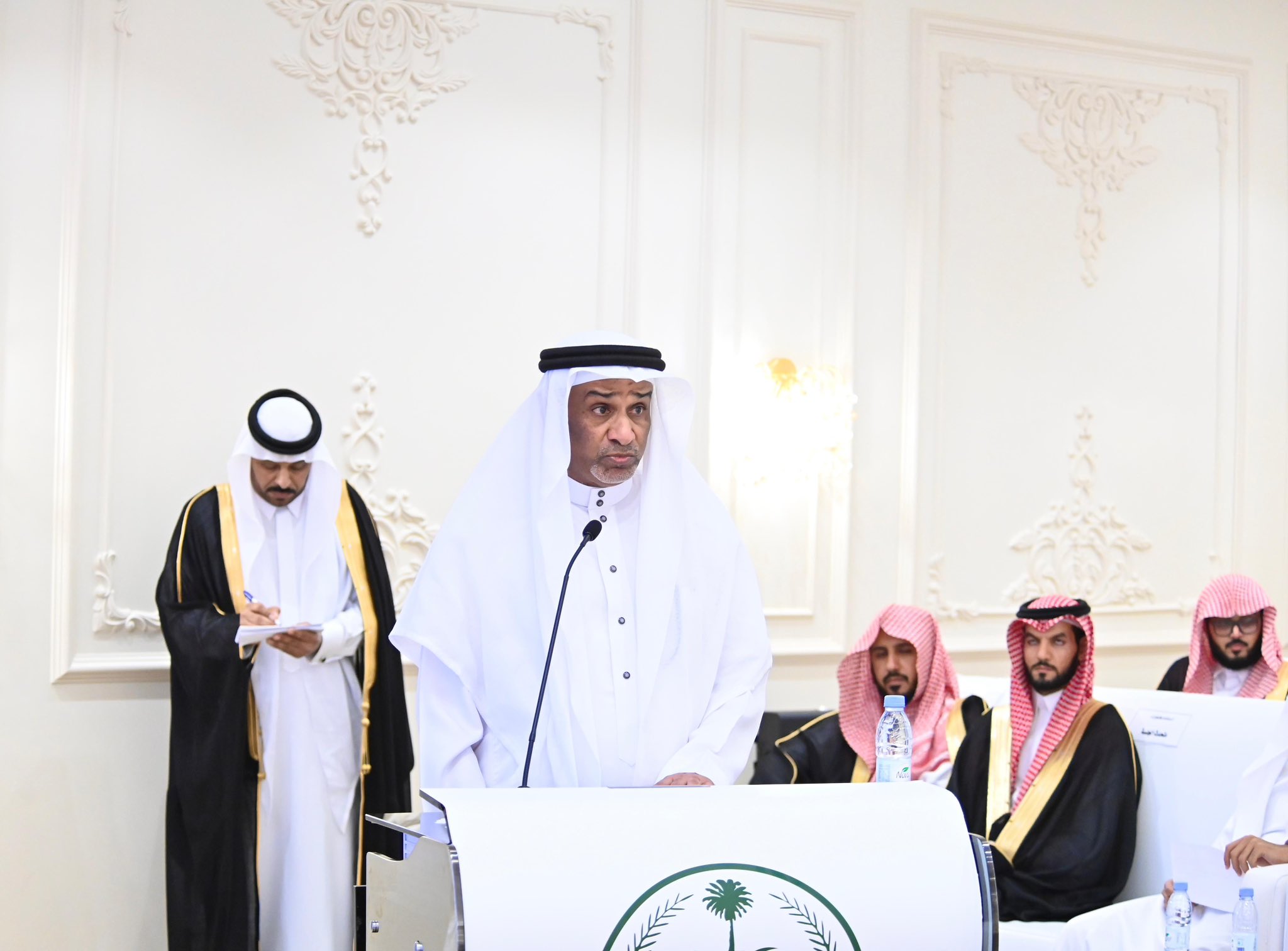
The Fourth Ministerial Conference of the Regional Integrated Multi-Hazard Early Warning System Center for Africa and Asia (RIMES) was launched today in the Sri Lankan capital, Colombo, with the participation of a number of ministers, representatives of Member States, and relevant regional and international organizations, and in the presence of the delegation of the Kingdom of Saudi Arabia, headed by the CEO of the National Center of Meteorology, Dr. Ayman bin Salem Ghulam.
In the Kingdom's speech during the opening session, Dr. Ghulam stressed the importance of regional and international cooperation to face the accelerated climate and environmental challenges, stressing the need to build integrated early warning systems that contribute to the protection of lives and property, and support sustainable development paths in the countries of the region.
He pointed out that this conference is an extension of international initiatives, especially the United Nations initiative "Early Warning for All", calling for addressing gaps in monitoring and analysis chains and enhancing effective communication with beneficiaries, in order to ensure decisions based on accurate scientific evidence.
The Kingdom was the first country in the Middle East to launch a national early warning system in 2011, through the National Center of Meteorology, and has continued to develop it by integrating artificial intelligence, remote sensing, and big data analysis, in addition to launching major national and regional initiatives such as "Green Saudi Arabia" and "Green Middle East," Ghulam explained.
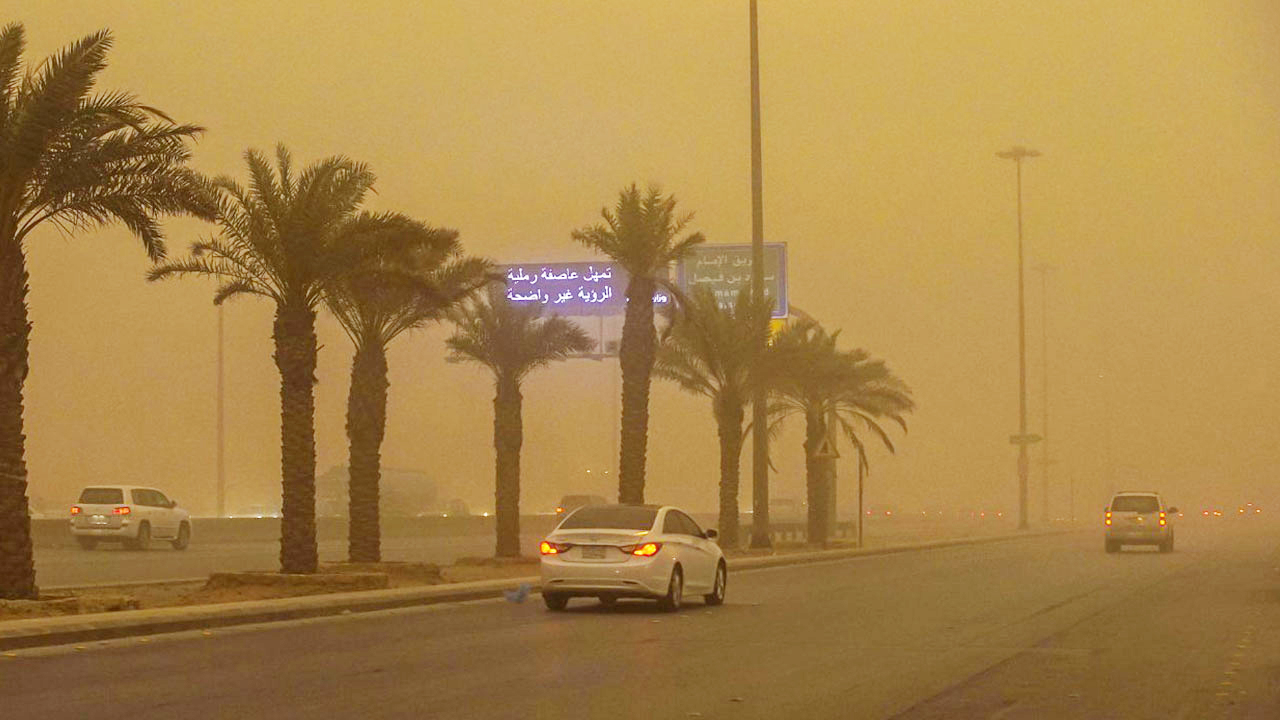
He also reviewed the Kingdom's efforts in supporting the regional and international system through the establishment of specialized centers such as the Center for Climate Change and Dust Storms and the National Rain Enhancement Program, in addition to its support for capacity-building and knowledge transfer programs for developing countries.
Dr. Ayman Ghulam concluded the Kingdom's speech by renewing the Kingdom's commitment to promoting joint climate action, developing unified digital infrastructure, and establishing regional platforms for data exchange and standardization, in a way that contributes to building a comprehensive, fairer, and more efficient early warning system.

 العربية








.png)